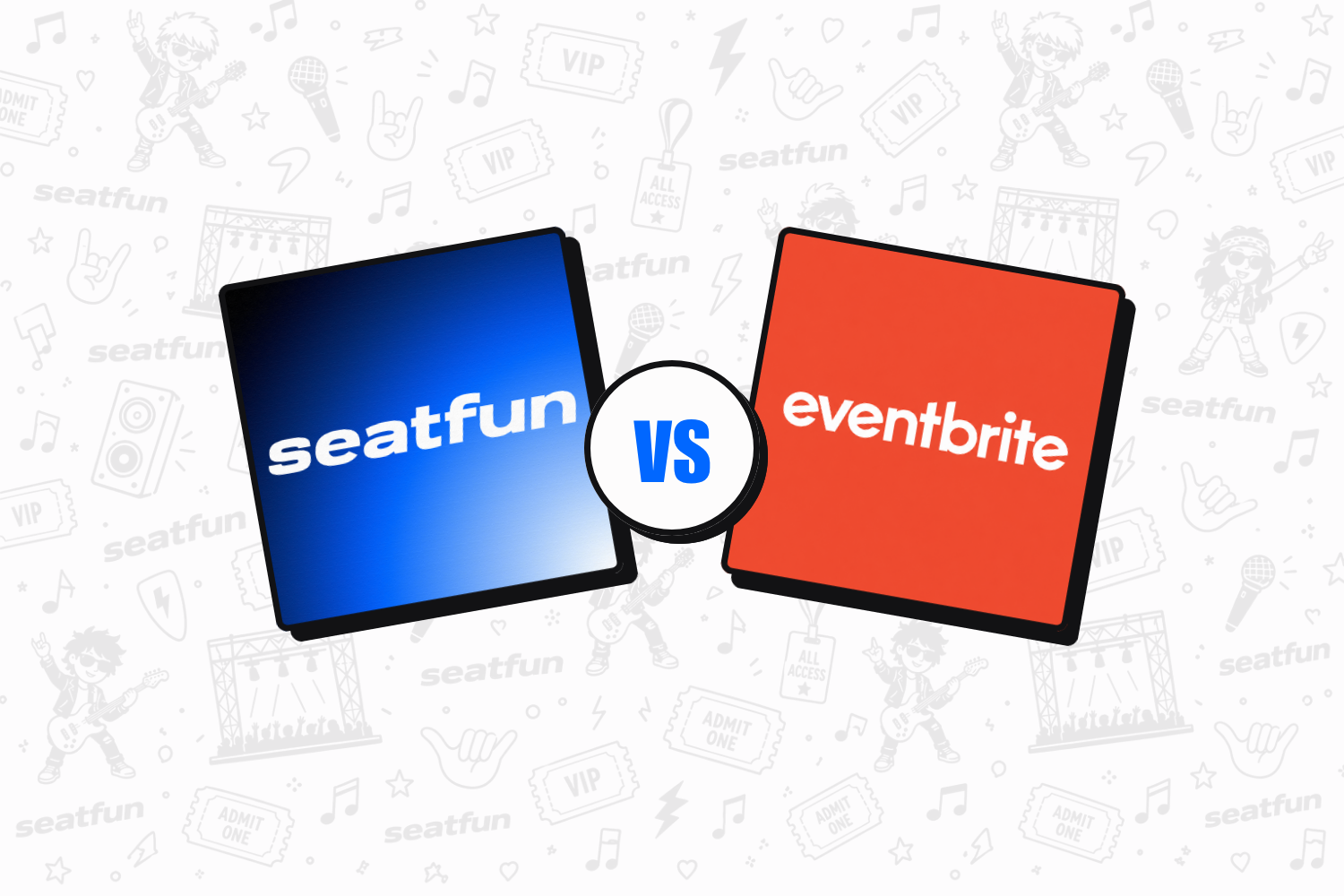
You've probably used Eventbrite. Almost everyone in the events world has at some point. It's the name people think of first when they hear "ticketing platform," the same way people think of Kleenex when they need a tissue.
But here's the thing about being the default choice: it doesn't mean you're the best choice. Especially now.
In March 2026, Eventbrite was acquired by Bending Spoons, an Italian tech conglomerate, for roughly $500 million. Within weeks, Bending Spoons laid off a large portion of Eventbrite's pre-acquisition workforce. If that name sounds familiar, it's because Bending Spoons follows the same playbook everywhere: acquire a well-known brand, gut the team, cut costs, and monetize harder. They did it with Evernote. They did it with WeTransfer (75% of staff cut). They did it with Vimeo, where they eliminated the entire video team at a video company. Now they're doing it with Eventbrite.
What does this mean for you? It means the platform you've relied on for years is now owned by a company with no roots in the live events industry, a track record of reducing support and restricting free features, and a financial model built on extracting more value from the products it acquires. If you were already frustrated with Eventbrite's high fees, slow payouts, and impersonal support, those problems are more likely to get worse than better.
Seatfun was built from the ground up as a modern ticketing platform for venues, promoters, and artists of all sizes who run events regularly and can't afford a platform that treats them like just another account.
This isn't a hit piece. Eventbrite does some things well. But if you're weighing your options (or watching the Bending Spoons situation and wondering what's next), you deserve an honest comparison. Here's how the two platforms actually stack up.
The Quick Comparison
The Bending Spoons Factor
This deserves its own section because it changes the calculus for anyone currently on Eventbrite.
Bending Spoons paid $500 million for Eventbrite, a fraction of the $1.76 billion valuation Eventbrite had when it went public in 2018. That discount tells you something about where the company was heading before the acquisition. And Bending Spoons' playbook tells you where it's heading after.
Within weeks of closing the deal, the new Eventbrite general manager, Andrea Parodi, confirmed that "a large portion of the pre-acquisition team" had been let go. Eventbrite had 636 employees at the end of 2025. The new owner won't say how many remain.
Why does this matter for your ticketing operation? Because the people who built your seatmaps, answered your support tickets, and maintained the features you depend on are being replaced by a smaller team whose primary mandate is to make Eventbrite more profitable for its new owner. That usually means higher fees, fewer free features, and leaner support.
If you've been on Eventbrite for years and things were already getting harder (slower support, higher costs, more friction), the acquisition is an accelerant, not a fix.
Fees: Who Controls What Your Fans Pay?
This is usually the first thing people ask about. And it's where the difference in philosophy shows up immediately.
Eventbrite charges high, rigid fees on every paid ticket sold. The fee structure is set by the platform. You don't get to negotiate it. It's the same whether you're selling 50 tickets to a poetry reading or 5,000 tickets to a festival. And with Bending Spoons now in charge, the historical trend for acquired platforms is that fees go up, not down.
Seatfun takes a completely different approach. Your fee structure is designed collaboratively between you and your Seatfun rep. That means you and the team work together to build a fee model that fits your venue, your ticket prices, and your revenue goals. It's not a one-size-fits-all formula. It's a conversation about what makes sense for your specific operation.
This matters whether you're running a 150-seat theater or a 5,000-capacity amphitheater. A rigid, predatory percentage set by a platform doesn't account for your market, your pricing, or your audience. Custom fees do.
Bottom line: Eventbrite dictates your fees. Seatfun builds them with you.
Payouts: When Do You Actually Get Your Money?
Cash flow is oxygen for event operators. The difference between getting paid tomorrow and getting paid in two weeks can determine whether you can cover the artist deposit for next weekend's show.
Eventbrite's default payout schedule sends funds to your bank account days after the event, with the money arriving in 5 to 7 business days after that. So realistically, you're looking at over a week after the event before you see your money. They do offer an early payout option, but that costs a significant additional fee, and it's only available to certain organizers.
Seatfun offers daily payouts as the default. No extra fee. No eligibility requirements. Revenue from yesterday's ticket sales lands in your account the next day. You can also choose weekly or monthly if that better fits your accounting, but daily is the standard.
The math here is simple. If you sell $10,000 in tickets over a two-week stretch, Eventbrite might hold those funds until after the event. With Seatfun, you're receiving that revenue in daily increments as tickets sell. That's money you can reinvest into marketing, cover artist guarantees, or keep your bar stocked.
Bottom line: Eventbrite pays you after the event (or charges extra for early access). Seatfun pays you every day, included in the deal.
Data Ownership: Whose Fans Are They?
This is the issue that makes venue owners angry once they fully understand it.
Eventbrite collects your ticket buyer data and uses it within their ecosystem. Yes, you can access attendee information through reports. But Eventbrite also uses that data to power their marketplace, including sending your buyers recommendations for other events, which may include events at competing venues. You don't get to install your own tracking pixels on Eventbrite event pages, which limits your ability to run retargeting campaigns on Facebook, Instagram, or Google.
Your data lives on Eventbrite's platform. If you leave, you can export basic attendee lists, but the behavioral data, the engagement history, and the audience insights stay behind. And now that data is controlled by Bending Spoons, a company with no history in live events and a financial model built on monetizing acquired user bases.
Seatfun gives you full ownership of your customer data. Names, emails, phone numbers. You can export it anytime. You can install your own tracking pixels for remarketing. Your event pages are built for your brand, and Seatfun never uses your buyer data to promote anyone else's events.
This is a fundamental difference. If you're investing time and money into marketing your shows, you should be building your audience, not feeding someone else's marketplace.
Bottom line: Eventbrite uses your data to grow their platform. Seatfun gives you the data and stays out of the way.
Cross-Promotion: Does Your Platform Promote Your Competitors?
This is the one that really stings.
Eventbrite is a marketplace. That's central to their value proposition. Fans browse Eventbrite to discover events, and organizers benefit from that traffic. But the flip side is that Eventbrite actively promotes other events to your ticket buyers. On your event page, in follow-up emails, through their app. Your fans bought tickets to your show, and Eventbrite uses that data to sell them on someone else's.
One of our partners at Coach's Corner put it bluntly after switching from Eventbrite: the thing he valued most about Seatfun was that we don't promote competitor events to his attendees.
Seatfun doesn't cross-promote. Period. Your event page is your event page. Your audience stays your audience. We don't use your ticket buyers to drive traffic to competing shows.
If you're a venue or promoter that relies on its own marketing to sell tickets (which is most event operators), the marketplace "discovery" benefit of Eventbrite is marginal at best. You're doing the work. Your platform shouldn't be giving the fruits of that work to someone else.
Bottom line: Eventbrite promotes competing events to your buyers. Seatfun never will.
Marketing Tools: Built In vs. Bolted On
Both platforms offer marketing features, but the depth and integration are different.
Eventbrite provides email marketing tools on a paid plan, social media ad integration, and marketplace listing. These tools are functional but geared toward their ecosystem. You're marketing through Eventbrite, which reinforces the data ownership issue above.
Seatfun includes SMS marketing with unlimited text campaigns and promo codes built into the platform at no extra charge. You also get referral and promo tracking, so you can see which promoters or influencers are actually driving ticket sales. Event pages are SEO-optimized and auto-indexed with Google Events, so your shows surface organically when people search for things to do in your area.
The SMS piece is a big deal. Text messages have dramatically higher open rates than email, and they're the single best channel for driving last-minute ticket sales. Having that built in, with no third-party subscription, saves you money and keeps your marketing workflow simple.
Bottom line: Eventbrite charges extra for email marketing and locks you into their ecosystem. Seatfun includes SMS, promo tracking, and SEO tools in the package.
Support: Chatbot vs. Human
This is where the "built for everyone" model breaks down hardest. And it's where the Bending Spoons acquisition is most concerning.
Eventbrite serves hundreds of thousands of organizers. At that scale, personalized support isn't feasible. You get a help center, a chatbot, and email support. If something goes wrong on event night, a scanning issue, a payment problem, a customer dispute, you're navigating a queue. Multiple organizers have reported difficulty reaching a real person, with resolution times stretching into days or weeks.
The Coach's Corner story is illustrative: they used Eventbrite for over a decade and had $20,000 in deposits held at one point, with no clear communication and weeks of waiting for answers. With a leaner post-acquisition team, that support experience is unlikely to improve.
Seatfun is invite-only specifically so we can provide real, hands-on support to every partner. You get a real person who responds within minutes. Not a ticket in a queue. Not a chatbot. Someone who knows your venue, your events, and your setup. Onboarding is hands-on: we help you build your seatmaps, configure your fee structure together, and get your team trained before the first event goes live.
Our partners at The Office Nashville described it as "more like SeatFAM." They said the team built them a full website and was available on the other line within minutes to answer questions.
Bottom line: Eventbrite support is self-serve at scale (and getting leaner). Seatfun support is personal by design.
Reserved Seating, Box Office, and Security
Reserved seating. Eventbrite offers it on higher-tier plans. Seatfun includes a seatmap builder on all accounts with custom layouts for sections, tables, rows, and tiered pricing, designed for the flexible room configurations that real venues deal with.
Box office tools. Both have mobile apps. Seatfun's includes a full mobile box office with Tap to Pay for walk-up sales, NFC scanning, and real-time attendance tracking, all from your phone with no extra hardware or fees.
Security. Both are PCI-compliant with Stripe processing. Seatfun adds proactive bot blocking, AI-powered fraud detection, and bank-level encryption on top of standard compliance.
When Eventbrite Might Still Make Sense
Let's be fair. Eventbrite might be the better fit if:
- You're hosting a one-off event and need the fastest possible setup
- You're running free events and don't need a deep ticketing partnership
- You rely heavily on marketplace discovery to fill seats (and don't mind the cross-promotion tradeoff)
When Seatfun Is the Clear Winner
Seatfun is built for you if:
- You run events regularly and need a modern platform that grows with your business
- Cash flow matters and you want daily payouts without extra fees
- You want full control of your customer data and marketing
- You're tired of your platform promoting competitor events to your audience
- You want custom service fees designed collaboratively, not a predatory percentage model
- You want real human support, not a help center and a chatbot
- You value your brand and don't want someone else's logo on your event pages
- You're concerned about what Bending Spoons' ownership means for Eventbrite's future
The Verdict
Eventbrite is the ticketing platform everyone knows. Seatfun is the modern ticketing platform that venues, promoters, and artists of all sizes actually need.
If you're running regular events, building a loyal audience, and treating your operation like a real business, you deserve a platform that treats you the same way. Not as one of hundreds of thousands of accounts managed by a company that just fired most of its team, but as a partner worth investing in.
That's the difference between a marketplace and a partner. And it's the difference between Eventbrite and Seatfun.
Ready to see it for yourself? Request an invite to Seatfun and find out what a real ticketing partnership looks like.