You sold 180 tickets to last Saturday's show at $25 each. That's $4,500 in gross ticket revenue. Not bad.
But after your ticketing platform took its cut, your artist guarantee ate $2,000, your sound tech cost $300, and your door staff ran $200, the number that actually landed in your account was a fraction of what you expected. And depending on your platform, that payout might not have arrived for another week.
If that math feels uncomfortably familiar, you're not alone. Most venue owners leave thousands of dollars on the table every month, not because they can't fill seats, but because the systems around their ticketing are quietly bleeding them dry.
This guide is about plugging those leaks. We're going to walk through the revenue levers you actually control as an event operator: your fee structure, your payout timing, your pricing strategy, your seating configuration, your marketing tools, and a lever most people overlook entirely: post-purchase upsells.
Each one, when optimized, puts more money in your pocket per event without requiring a single additional ticket sale. Whether you're running a 150-seat club or a 5,000-capacity amphitheater, these strategies apply. Let's get into it.
The Revenue Equation Most Venue Owners Get Wrong
Here's how most people think about ticket revenue:
Tickets sold x ticket price = revenue.
That's the gross number. The net number, the money that actually lands in your account, looks very different:
(Tickets sold x ticket price) - platform fees - processing fees - early payout fees - marketing tool subscriptions - artist guarantee - production costs - staffing = what you keep.
Most venue owners obsess over the first part of that equation (sell more tickets, raise prices) while ignoring the middle part (fees, payout timing, tool costs). But the middle part is often where the biggest gains are hiding.
A venue that sells 200 tickets at $30 and keeps more of that gross revenue is in a fundamentally different financial position than a venue selling the same tickets but hemorrhaging money to high platform fees, payout delays, and bolt-on marketing subscriptions. Over 150 events per year, that difference can easily be tens of thousands of dollars.
Same attendance. Same ticket price. Dramatically different outcome. The difference is your platform economics.
Lever 1: Your Fee Structure
This is the single biggest controllable factor in your ticket revenue, and it's the one most venue owners accept as fixed.
On most ticketing platforms, you don't get a say in your fee structure. The platform sets a high, rigid percentage, and you either absorb it or pass it to fans. Either way, it's money leaving the system. And those fees compound fast when you're running events multiple nights a week.
Legacy platforms charge predatory service fees that eat into your margins on every single ticket sold. The math adds up to thousands per month and tens of thousands per year, money that should be going toward artist deposits, marketing, or your bottom line.
What to do about it: Look for a platform that lets you design your fee structure collaboratively rather than dictating it. The ability to set your own service fee, control whether it's absorbed or passed through, and tailor the model to your specific ticket price range is one of the most impactful decisions you can make.
Seatfun builds custom service fees together with each partner. You and your Seatfun rep design a fee model that fits your operation, your ticket prices, and your revenue goals. Not a one-size-fits-all percentage that was designed for someone else's business.
Lever 2: Payout Speed
Cash flow isn't just an accounting concept. It's the operational oxygen of running events. The timing of when you receive your ticket revenue determines what you can invest in next, and how quickly.
Consider the difference:
Scenario A: You sell $8,000 in tickets over two weeks. The event happens on Saturday. Your platform sends the payout days later. The money clears in 5 to 7 business days. You receive $8,000 (minus fees) roughly 10 days after the event. In the meantime, you've already paid the artist, the production crew, and your bar distributor out of pocket.
Scenario B: You sell $8,000 in tickets over two weeks. Every day, as tickets sell, the revenue hits your account the next morning. By the time the event happens, you've already received most of the ticket revenue. You're paying expenses with money you've already earned, not money you're waiting on.
The difference between these two scenarios isn't just convenience. It's structural. In Scenario A, you're running a business on credit between events. In Scenario B, you're reinvesting revenue in real time.
Some platforms charge a significant additional fee for "instant" or early payouts. That means they're charging you to access your own money faster. Think about what that really means: the platform is profiting from the delay they built into the system.
What to do about it: Daily payouts with no extra fee should be your baseline expectation, not a premium add-on. Seatfun pays daily by default. No surcharges. No eligibility hoops. Your money, the next morning.
Lever 3: Ticket Pricing Strategy
Most venues use flat pricing: one ticket type, one price. It's simple, and it works for general admission rooms. But it leaves money on the table.
Here are three pricing approaches that consistently increase revenue per event without increasing capacity:
Early Bird Tiers
Release a limited number of tickets at a lower price, then raise the price to the standard rate after those sell, then bump it again closer to the event. This rewards early buyers, creates urgency, and captures more revenue from last-minute purchasers who are willing to pay a premium.
The key is to keep the tiers structured and the price jumps reasonable. Most venues report a meaningful increase in gross ticket revenue from adding early bird tiers alone.
VIP and Premium Options
Even in a mid-size room, there are fans willing to pay more for a better experience. Front-row tables. A reserved section near the stage. A meet-and-greet with the artist. A drink package.
The specific offering depends on your venue and your audience, but the principle is universal: a percentage of your audience will always trade up if given the option.
Day-of Pricing
Raise the price at the door. Walk-up buyers have already committed to coming. They're standing in front of your venue. The convenience of buying at the door is worth a premium, and most fans expect it. This also incentivizes advance purchases, which gives you better forecasting and earlier cash flow.
What to do about it: Even if you only implement one of these, you'll see a noticeable bump. Start with early bird tiers since they require the least operational change and generate the most predictable results.
Lever 4: Reserved Seating and Seatmaps
General admission pricing treats every spot in the room as equal. It's not. The table next to the stage is worth more than the standing area by the bar. The front-row center seat is worth more than the back corner.
Reserved seating with a proper seatmap lets you price accordingly. Create tiers based on location: premium, standard, and value. Fans who want the best seats pay more. Fans who want a deal sit further back. Everyone's happy, and your revenue per event goes up without adding a single seat.
The key is having a seatmap tool that actually matches your room. Not a generic template. Not a one-size-fits-all grid. A seatmap that reflects your specific layout: tables for 2, tables for 4, booth seating, bar rail, and a standing GA section in the back.
Seatfun's seatmap builder is designed for exactly this. Custom layouts for sections, tables, rows, and tiered pricing, built with you during onboarding to match your actual room.
Lever 5: Post-Purchase Upsells and Merch
This is the lever most ticketing platforms ignore entirely, and it's one of the fastest ways to increase your average order value (AOV) without selling a single extra ticket.
Here's the idea: after a fan completes a ticket purchase, they see an upsell offer before they leave the checkout flow. A band tee. A commemorative poster. A drink voucher. A parking pass. A VIP upgrade. The fan already has their wallet out and they're excited about the show. That's the highest-intent moment in the entire transaction.
With Seatfun's latest update, you'll be able to upsell merch or any item directly after a ticket purchase to maximize AOV. That means a fan buys two tickets to Saturday's show and immediately sees an offer for the headliner's tour shirt, a limited-edition event poster, or a fast-entry pass. One tap to add it. No separate merch store. No second checkout. No friction.
Why this matters: If even 15% of your ticket buyers add a $20 merch item or add-on, that's an extra $3 per ticket in revenue across your entire sales volume. Over 10,000 tickets per year, that's $30,000 in incremental revenue you weren't capturing before. Same fans. Same events. Higher AOV.
What to upsell:
- Artist merch (tees, hoodies, vinyl, posters). Negotiate a revenue share with the artist or buy wholesale and sell direct.
- Venue merch (branded tees, hats, stickers, pint glasses). Pure margin for your operation.
- Drink vouchers (redeem at the bar on event night). Drives bar revenue and reduces friction at the counter.
- Parking passes (if your venue has a lot). Low cost to fulfill, high perceived value for the buyer.
- VIP or seat upgrades (move from GA to reserved, or standard to front-row). The highest-margin upsell available.
- Commemorative items (event-specific posters, photo prints, keepsake tickets). Creates collectibility and drives impulse buys.
The venues that treat the checkout as a revenue moment, not just a transaction endpoint, consistently generate higher per-head revenue than the ones that stop at the ticket sale.
Lever 6: Built-In Marketing Tools
If your ticketing platform doesn't include marketing tools, you're paying for them somewhere else. And those costs add up.
SMS marketing is the highest-converting channel for driving ticket sales. A single text to your buyer list can sell 20 to 50 tickets in an hour. If your platform doesn't include it, you're paying for a standalone SMS service on top of your ticketing fees.
Promo codes and referral tracking let you measure which promoters, influencers, and partners are actually driving sales. This isn't just a nice-to-have. It's how you decide where to invest your limited marketing budget.
SEO-optimized event pages that auto-index with Google Events drive organic discovery without ad spend. When someone in your city searches "live music this weekend" or "things to do near me," your shows should appear. This is free, ongoing traffic that compounds over time.
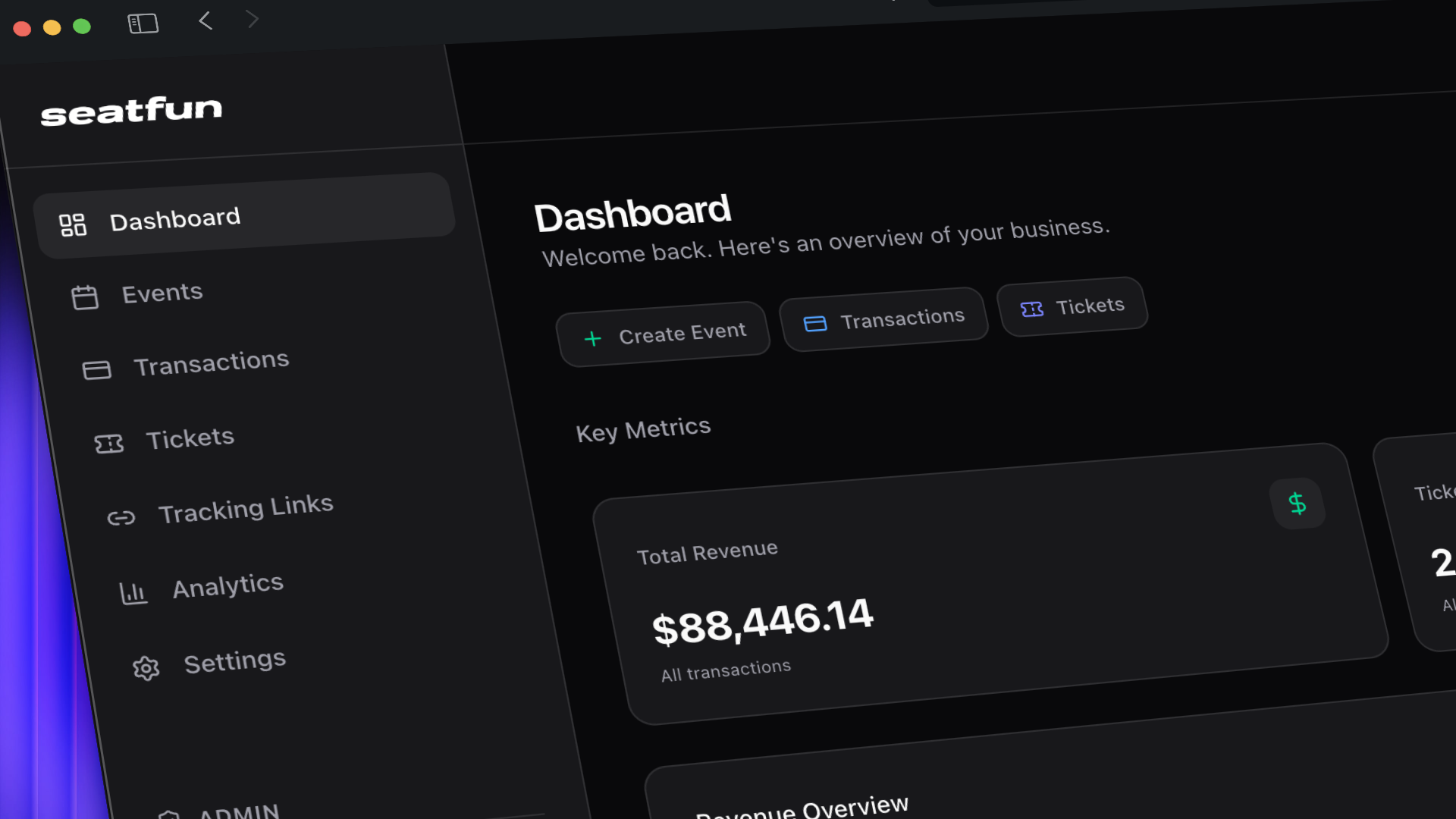
Seatfun includes all of these, built in, at no extra charge. No separate SMS subscription. No third-party email tool. No add-on analytics package.
What to do about it: Add up what you're currently paying for SMS tools, email platforms, and ad management outside of your ticketing platform. That's money you could eliminate by choosing a platform with these features already included.
Lever 7: Stop Paying to Promote Your Competition
This one isn't about making more money. It's about not losing the money you've already spent.
If your ticketing platform promotes competing events to your ticket buyers through marketplace recommendations, sidebar listings, or follow-up emails, your marketing investment is leaking. You paid for the Instagram ad that drove the fan to your event page. The platform then used that traffic to promote a show at the venue down the street.
What to do about it: Choose a platform that explicitly does not cross-promote competing events to your audience. Your event page should promote your event and nothing else. Your customer data should be used for your marketing and nobody else's. Seatfun never cross-promotes. That's not a feature. It's a principle.
Lever 8: Understand Your Real Revenue Per Event
All of these levers only work if you're tracking the right numbers. Most venue owners track gross ticket sales. Fewer track net revenue per event after all platform costs. Even fewer track revenue per attendee across ticket sales, bar, merch, and other income.
Here's a simple framework to start:
Gross ticket revenue: Tickets sold x average ticket price.
Net ticket revenue: Gross minus all platform fees, processing fees, and payout surcharges.
Revenue per attendee (ticket only): Net ticket revenue / total attendees.
Revenue per attendee (total): Add bar revenue, merch revenue, upsell revenue, and any other per-head income, then divide by total attendees.
Track these numbers for every event. After 10 events, you'll start seeing patterns: which nights generate the most revenue per head, which pricing tiers sell best, which upsells convert, and which marketing channels drive the most cost-effective sales. Those patterns are your roadmap.
The Bottom Line
Maximizing ticket revenue isn't about squeezing fans for every last dollar. It's about building a system where more of the money that changes hands actually stays in your business.
The platform you use, the fees you pay, when you get your money, how you price your tickets, what you upsell after the purchase, and the tools you use to market your shows are all controllable variables. Most venue owners treat them as fixed. The ones who treat them as levers are the ones who stay profitable year after year.
Seatfun was built to give event operators of all sizes control over every one of these levers. Custom fees designed together. Daily payouts. Seatmap builder with tiered pricing. Post-purchase merch and add-on upsells. Built-in SMS and promo tracking. No cross-promotion. And a team that helps you optimize the whole system, not just process your transactions.
If you're ready to stop leaving money on the table, request an invite to Seatfun and let's talk about what your revenue could look like.
Frequently Asked Questions
How can venues increase ticket revenue without raising prices?The most effective strategies are adding pricing tiers (early bird, standard, day-of), implementing reserved seating with premium sections, reducing platform fees through a custom fee structure, using built-in marketing tools like SMS to drive more advance sales, and adding post-purchase upsells (merch, drink vouchers, VIP upgrades) to increase average order value.
How do daily payouts help venue cash flow?Daily payouts mean ticket revenue hits your bank account the morning after each sale, rather than days or weeks after the event. This lets you cover artist deposits, production costs, and bar inventory with money you've already earned instead of floating those expenses on credit or personal savings.
Is reserved seating worth it for venues?Yes. Reserved seating allows you to charge more for premium locations (front tables, stage-adjacent sections) while keeping general areas affordable. Venues that switch from flat GA pricing to tiered reserved seating typically see a meaningful increase in gross ticket revenue per event.
What is post-purchase upselling for events?Post-purchase upselling means offering fans additional items (merch, drink vouchers, parking passes, VIP upgrades) immediately after they complete a ticket purchase. Because the fan already has their wallet out and is excited about the event, conversion rates on these offers are significantly higher than cold outreach. Seatfun's latest update enables this directly in the checkout flow.
What marketing tools should be built into my ticketing platform?At minimum: SMS campaigns, promo code creation and tracking, referral/promoter tracking, SEO-optimized event pages with Google Events indexing, and full data export for building ad audiences. If your platform charges extra for any of these, factor that cost into your total platform expense.
See also: The Ultimate Guide to Choosing a Ticketing Platform, The Hidden Costs of "Free" Ticketing Platforms, and Seatfun vs Eventbrite.